SDF Metaballs

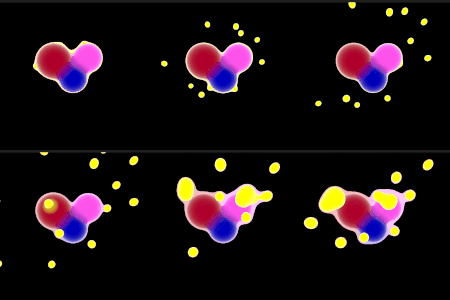
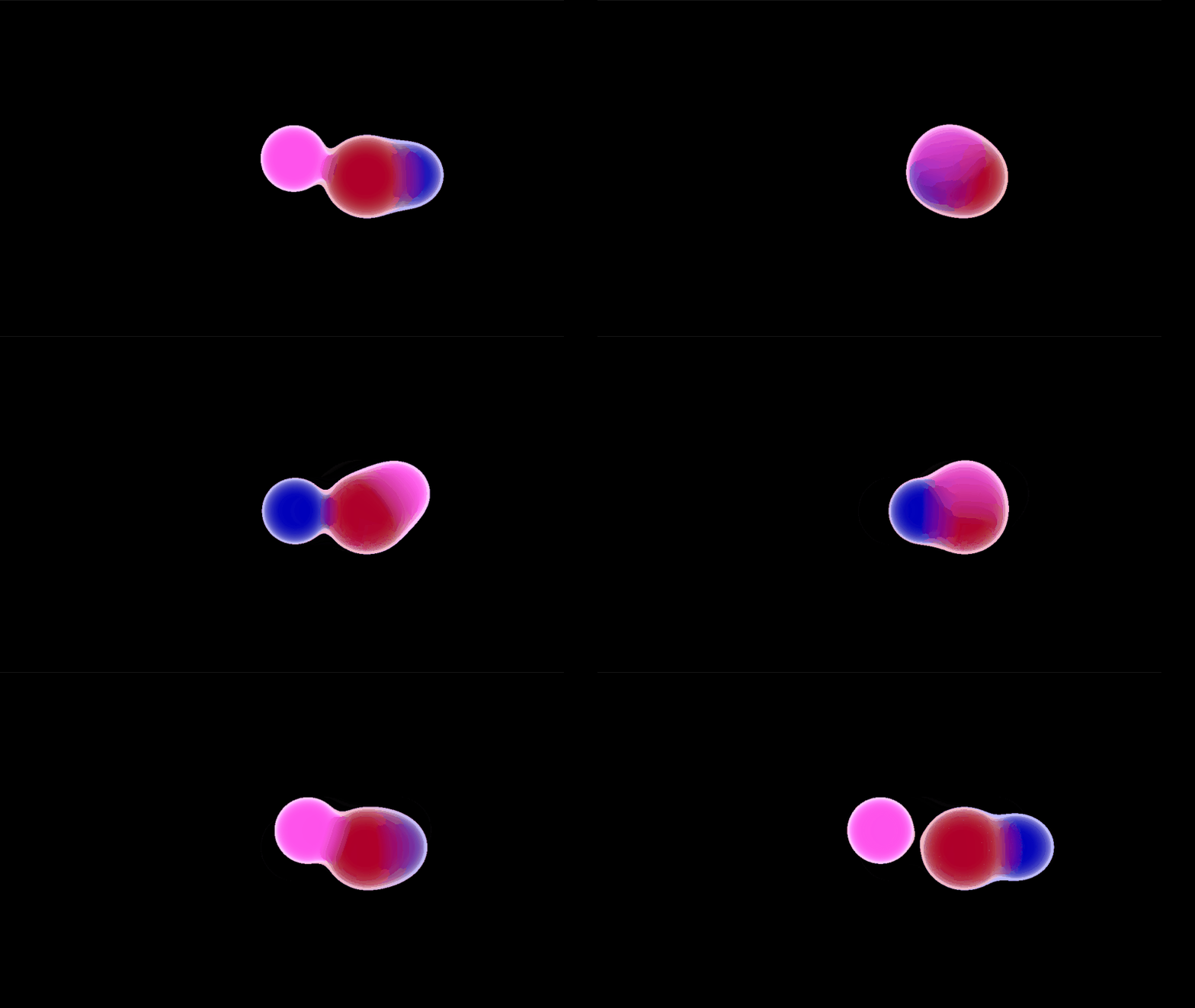
This is a metaballs shader that uses ray marching to perfectly blend one ball into another.
Set up :
1. Create a mesh instance and assign box mesh and set its size large enough (100,100,100 etc).
2. Attach this material to the mesh’s first material slot.
3. Pass the uniforms (ball_positions, ball_colors, and active_balls) from a script.
This is the script im using for passing uniforms (attached to the mesh) :
@tool
extends MeshInstance3D

# if you want to see changes in editor, keep this true
@export var run_in_editor: bool = true
@export var mat : ShaderMaterial
@export var max_active : int = 20

func _ready() -> void:
	mat = get_active_material(0) as ShaderMaterial

func _process(delta):
	if Engine.is_editor_hint() and not run_in_editor:
		return

	var positions = []
	var colors = []
	var active_count = 0
	for child in get_children():
		if child is Metaball:
			var radius = child.radius
			positions.append(Vector4(child.global_position.x,child.global_position.y,child.global_position.z, radius))

			colors.append(child.color)
			active_count += 1

			if child is MeshInstance3D and child.visible:
				child.visible = false

			if active_count >= max_active:
				break

	if active_count > 0:
		mat.set_shader_parameter("active_balls", active_count)
		mat.set_shader_parameter("ball_positions", positions)
		mat.set_shader_parameter("ball_colors", colors)
you can pass the uniforms by adding nodes as children of the mesh or a group :
extends Node3D

class_name Metaball

@export var color : Color
@export var radius : float
Shader code
shader_type spatial;
render_mode unshaded, cull_disabled; //we handle lighting manually for performance

uniform int max_steps = 20;  //max number of steps in ray marching loop, reduce this to increase performance but reduce accuracy
uniform float max_dist = 20.0;    // max ray distance
uniform float surf_dist = 0.01;   // precision of the surface hit

uniform vec4 ball_positions[20]; //array to hold ball positions, vec4.w is radius of the metaball
uniform vec4 ball_colors[20];  // array to hold ball colors
uniform int active_balls = 0;     // how many balls are currently active
uniform float smoothness = 0.8;   // smoothness of the connection

float smin(float d1, float d2, float k) {
    float h = clamp(0.5 + 0.5 * (d2 - d1) / k, 0.0, 1.0);
    return mix(d2, d1, h) - k * h * (1.0 - h);
}

vec3 smin_col(float d1, float d2, vec3 c1, vec3 c2, float k) {
    float h = clamp(0.5 + 0.5 * (d2 - d1) / k, 0.0, 1.0);
    return mix(c2, c1, h);
}

vec4 get_scene(vec3 p) {
    float d = max_dist;
    vec3 col = vec3(0.0);

    for(int i = 0; i < active_balls; i++) {
        float sphere_dist = length(p - ball_positions[i].xyz) - ball_positions[i].w;
        vec3 sphere_col = ball_colors[i].rgb;

        if (i == 0) {
            d = sphere_dist;
            col = sphere_col;
        } else {
            col = smin_col(d, sphere_dist, col, sphere_col, smoothness);
            d = smin(d, sphere_dist, smoothness);
        }
    }
    return vec4(d, col);
}

vec3 get_normal(vec3 p) {
    float d = get_scene(p).x;
    vec2 e = vec2(0.01, 0);

    vec3 n = d - vec3(
        get_scene(p - e.xyy).x,
        get_scene(p - e.yxy).x,
        get_scene(p - e.yyx).x
    );

    return normalize(n);
}

void fragment() {

    vec3 ro = (inverse(VIEW_MATRIX) * vec4(0.0, 0.0, 0.0, 1.0)).xyz; //ray origin
    vec3 rd = normalize((inverse(VIEW_MATRIX) * vec4(VERTEX, 1.0)).xyz - ro); //ray direction

    // raymarching loop
    float d = 0.0; // distance traveled
    bool hit = false;
    vec3 p;
	vec4 result;
    for(int i = 0; i < max_steps; i++) {
        vec3 p = ro + rd * d;
        result = get_scene(p); //get distance and color
        float dS = result.x;
        d += dS;
        if(d > max_dist || dS < surf_dist) break;
    }

    if(d < max_dist) {
        vec3 p = ro + rd * d;
        vec3 n = get_normal(p);

        // rim lighting
        float rim = 1.0 - max(dot(n, -rd), 0.0);
        rim = pow(rim, 3.0);

        ALBEDO = result.yzw + (vec3(1.0) * rim * 0.5);
    } else {
        discard; // draw nothing if missed
    }
}
Live Preview