
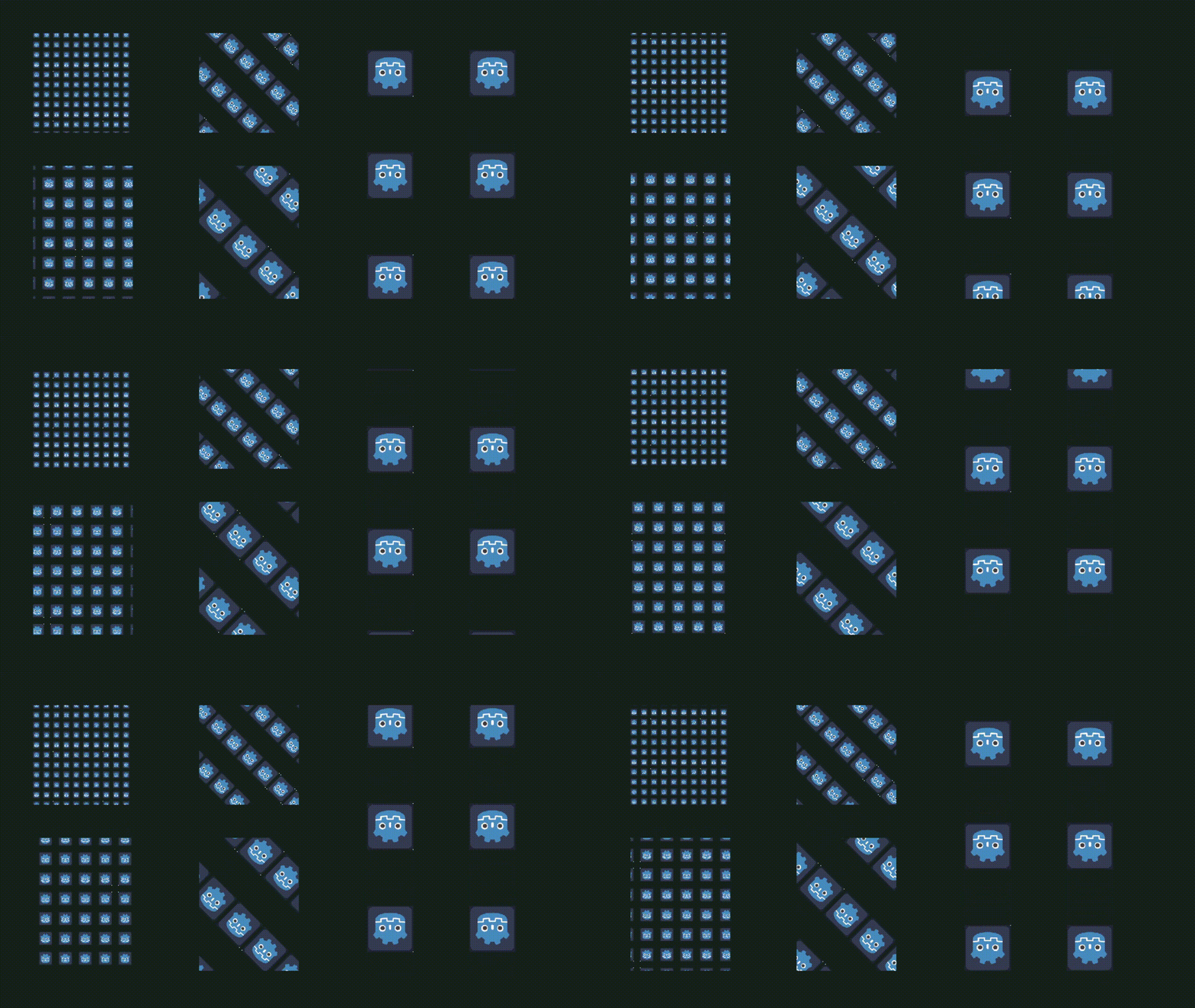
Scroll, Scale, and Rotate

I wrote this shader while learning shaders in Godot. You can use it on a Sprite2D by setting it as the material.
Shader Parameters:
- Rotate Degree : float -> rotates the texture by degree
- Move Degree : float -> direction of movement (move upward by default)
- Speed : float -> speed of movement. Set to 0 to stop the movement
- Scale : float -> scales the texture
- Gap : vec2 -> adds empty space between repeated texture
- Node Scale : vec2 -> keeps the texture the same size even if you scale the Sprite2D. You can copy the value from Node2D.transform.scale, or make it automatic in a script (for example, using @tool and setting it in _ready()).
License: CC0 (public domain)
Shader code
shader_type canvas_item;

uniform float rotate_degree : hint_range(0.0, 360.0, 0.1) = 0;
uniform float move_degree :  hint_range(0.0, 360.0, 0.1) = 0;
uniform float speed : hint_range(0.0, 100.0) = 1;
uniform float scale : hint_range(0.01, 100.0, 0.01) = 0.2;
uniform vec2 gap = vec2(0.5, 0.5);
uniform vec2 node_scale = vec2(1.0);

vec2 rotate(vec2 uv, float local_angle) {
	mat2 rotation = mat2(vec2(sin(local_angle), -cos(local_angle)),
			vec2(cos(local_angle), sin(local_angle)));

    uv = uv * rotation;
    return uv;
}

void fragment() {
	vec2 scaled_uv = UV*node_scale / scale;
	float rotate_radians = radians(rotate_degree+90.0);
	float move_radians = radians(move_degree+180.0)-rotate_radians;
	vec2 normilazed_vector = vec2(cos(move_radians), sin(move_radians));
	vec2 rotated_uv = rotate(scaled_uv, rotate_radians);
	vec2 scrolled_uv = rotated_uv + normilazed_vector * speed * TIME;

	vec2 period = 1.0 + max(gap, vec2(0,0));
	vec2 cell_idx = floor(scrolled_uv / period);
	vec2 pos = scrolled_uv - cell_idx * period;

	float alpha = step(max(pos.x, pos.y), 1.0);
	vec4 tex = texture(TEXTURE, pos);

	COLOR = vec4(vec3(tex.rgb), alpha);
}
fuck this shite here boys
right ive had it up to HERE wif your behaviour boy. i have had ENUF of this constant bullyin and such,, makin all the feelies go downnnn down down…. just not reight .
negatividaddiesabout here and the like .