
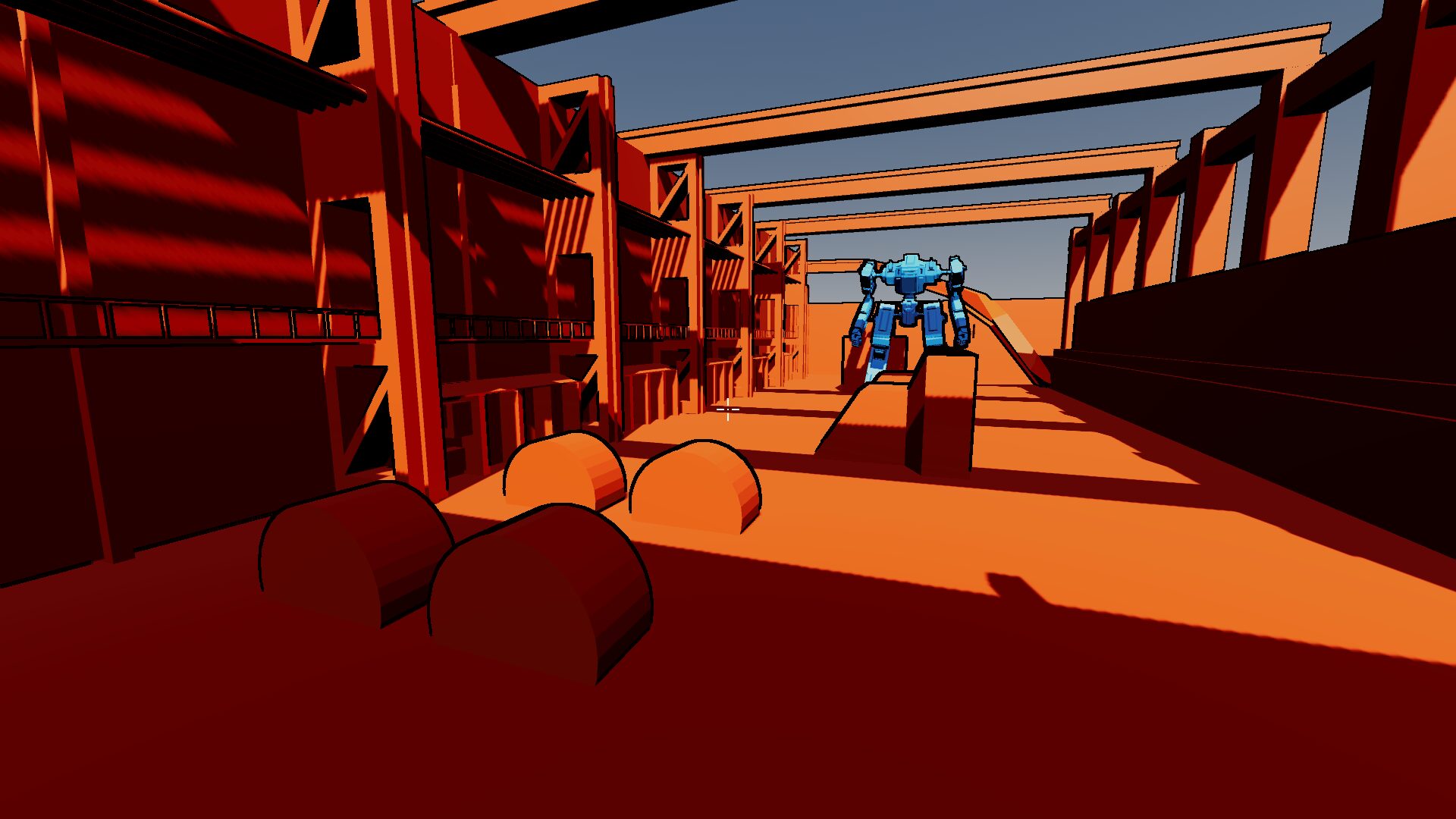
“Hand Drawn” Depth-Based Sobel Outline for Compatibility Renderer with Directional Shadow Support
This Sobel outline shader attempts to recreate the look of normal-based implementations without access to the hint_normal_roughness_texture using depth_texture only.
Use:
If you do not want to use directional shadows in your scene, you do not need to set a Ghost Texture, simply create a screen space quad as described here and apply this shader as the material.
If you want clean lines, do not set a Noise Texture, and set Jitter Amount and Jitter Speed to 0.0.
Adjust Depth Threshold, Color Threshold and your Camera3Ds Near plane until you are satisfied with the result. In the shader code in the fragment() function, set the variables float n and float f to your camera’s Near and Far values respectively.
Apply a noise texture and adjust Jitter settings to displace and animate the lines to simulate a hand-drawn look.
If you want to use Directional Shadows, they will also recieve an outline unless we use a second SubViewport and Camera3D with a duplicate quad mesh.
Copy your camera and paste it into a SubViewport in your scene, make sure the size of the viewport exactly matches your game window size. Set the CameraCullMask on this second Camera to ONLY render the layer that your shadows are cast on [By Default, use Layer 1]. Likewise, set your Directional Light VisualInstance3D Layers to only appear on the same layer you set your Ghost Camera to [Layer 1 enabled, disable all others].
In the Shader Parameters under Ghost Tex choose New Viewport texture and select the new SubViewport. Under Resource make sure Local to Scene is selected.
Add a script to the Ghost Camera to make it follow the Main Camera:
@tool
extends Camera3D

@export var main_camera : Camera3D

func _process(_delta):
    if Engine.is_editor_hint():
       # In editor, sync with the active editor 3D camera
       var ed_cam = get_viewport().get_camera_3d()

    if ed_cam:
       global_transform = ed_cam.global_transform
       fov = ed_cam.fov

    elif main_camera:
       # In game, sync with your player camera
       global_transform = main_camera.global_transform
       fov = main_camera.fov
This renders a second version of our scene without shadows and uses that to draw our outlines from, and then layers that viewport overtop of our main scene, allowing the use of both the depth-based outline and built-in dynamic Directional Shadows.
Shader code
shader_type spatial;
render_mode unshaded, cull_disabled;

uniform sampler2D screen_tex : hint_screen_texture, filter_linear_mipmap;
uniform sampler2D depth_tex : hint_depth_texture, repeat_disable, filter_nearest;
uniform sampler2D ghost_tex : source_color;
uniform sampler2D noise_tex : repeat_enable;

uniform float jitter_amount : hint_range(0.0, 0.01) = 0.002;
uniform float jitter_speed : hint_range(0.0, 5.0) = 1.0;

uniform float depth_threshold : hint_range(0.0, 2.0) = 0.2;
uniform float color_threshold : hint_range(0.0, 1.0) = 0.1;
uniform vec4 edge_color : source_color = vec4(0.0, 0.0, 0.0, 1.0);
uniform float edge_width : hint_range(0.1, 5.0) = 1.0;

void vertex() {
	// Ensure the quad stays in front of the camera in clip space
    POSITION = vec4(VERTEX.xy, 1.0, 1.0);
}

void fragment() {
    // 1. Check center raw depth
    // If the Ghost Camera sees "Sky" (the hidden floor), raw_d_center will be 0.0.
    float raw_d_center = texture(depth_tex, SCREEN_UV).r;
    vec3 scene_color = texture(screen_tex, SCREEN_UV).rgb;

    if (raw_d_center > 0.0001) {
        // --- START OF OUTLINE LOGIC ---
        vec2 jitter = texture(noise_tex, SCREEN_UV + TIME * jitter_speed).rg * jitter_amount;
        vec2 ps = (1.0 / VIEWPORT_SIZE) * edge_width;

        float d[9];
        float l[9];

        // SET N TO YOUR CAMERA NEAR PLANE, F TO FAR PLANE
        float n = 0.2;
        float f = 500.0;

        int index = 0;
        for (int y = -1; y <= 1; y++) {
            for (int x = -1; x <= 1; x++) {
                vec2 uv = (SCREEN_UV + jitter) + vec2(float(x), float(y)) * ps;

                float raw_d = texture(depth_tex, uv).r;
                d[index] = n * f / (f - raw_d * (f - n));

                vec3 ghost_c = texture(ghost_tex, uv).rgb;
                l[index] = dot(ghost_c, vec3(0.299, 0.587, 0.114));

                index++;
            }
        }

        float s_h_d = d[2] + (2.0 * d[5]) + d[8] - (d[0] + (2.0 * d[3]) + d[6]);
        float s_v_d = d[0] + (2.0 * d[1]) + d[2] - (d[6] + (2.0 * d[7]) + d[8]);
        float depth_mag = sqrt(s_h_d * s_h_d + s_v_d * s_v_d);

        float s_h_l = l[2] + (2.0 * l[5]) + l[8] - (l[0] + (2.0 * l[3]) + l[6]);
        float s_v_l = l[0] + (2.0 * l[1]) + l[2] - (l[6] + (2.0 * l[7]) + l[8]);
        float color_mag = sqrt(s_h_l * s_h_l + s_v_l * s_v_l);

        float final_depth_mag = depth_mag / max(d[4], 0.1);

        if (final_depth_mag > depth_threshold || color_mag > color_threshold) {
            ALBEDO = edge_color.rgb;
        } else {
            ALBEDO = scene_color;
        }
    } else {
        // 2. If it's the "Sky" (where the floor is hidden), just show the main scene.
        ALBEDO = scene_color;
    }
}
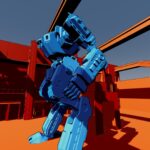
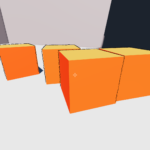
Live Preview

Hey!
Cool shader, love a jiggly line.
Is there a reason you use fragment scope variables for near and far (e.g.
nandfin fragment())?For ergonomics, and understanding the shader better, I moved those variables to uniforms but I am wondering if you had them as scoped constants for a particular reason.
Cheers!
The effect is nice but… rendering the scene twice? No thanks
I have the quad set up properly but it does not display any lines through it.
I’m not setting up the directional shadows part but is there parts in the instructions that are actually important for using it without the shadows as well? It’s not the most clear how much of it can be ignored if you’re not doing directional shadows.
Great work though I love the effect.