
Slash Shader
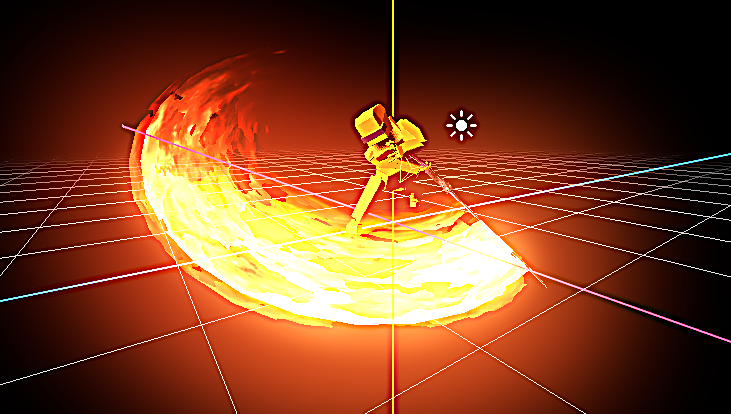
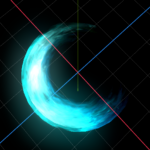
A fiery slash VFX shader for Godot (3D Spatial), featuring noise-based distortion, animated flicker, gradient coloring, and smooth dissolve-fade control. Uses procedural noise flow, time-driven intensity flicker, UV-distortion, and a three-tone gradient (bright → mid → dark) to create a dynamic, impactful sword-slash or energy-cut effect. Fully customizable through parameters for speed, color, dissolve, noise strength, fade timing, and more.
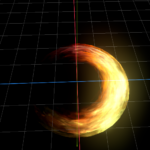
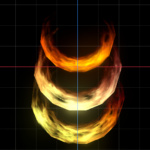
This shader requires a mesh (custom mesh) to display properly. Please visit my GitHub by clicking “Get demo project” to download the whole project (mesh + texture).
or
you can visit my youtube channel to see tutorial by clicking on “See more about this shader”.
Shader code
shader_type spatial;
render_mode blend_add, depth_draw_opaque, cull_disabled, diffuse_lambert, specular_schlick_ggx, unshaded;

// --- Main parameters ---
uniform vec2 offset;
uniform float speed;
uniform float duration;
uniform sampler2D Slash_Texture : repeat_disable;
uniform float intensity;
uniform float flicker_speed;
uniform float flicker_strength;
uniform float fade_start;
uniform float fade_end;

// --- Noise control ---
uniform sampler2D noise : repeat_enable;
uniform float noise_flow = 1.0;
uniform float noise_strength = 0.1;
uniform float Dissovle; // keeping same spelling as original for compatibility

// --- Gradient colors ---
uniform vec3 Bright_Color : source_color = vec3(1.0, 0.8, 0.3); // bright start (yellow)
uniform vec3 Mid_Color    : source_color = vec3(1.0, 0.3, 0.0); // mid (orange/red)
uniform vec3 Dark_Color   : source_color = vec3(0.0, 0.0, 0.0); // end (black)
uniform float Gradient_Sharpness = 1.0; // 0.5=soft, 2.0=sharp

void fragment() {
// --- Base setup ---
float progress = clamp(speed / duration, 0.0, 1.0);

// --- Flicker intensity ---
float flicker = sin(TIME * flicker_speed) * flicker_strength + 1.0;
float combined_intensity = intensity * flicker;

// --- Fade control ---
float fade = 1.0 - smoothstep(fade_start, fade_end, progress);

// --- Seamless noise UV (prevents line artifacts) ---
vec2 noise_uv = fract(UV + vec2(TIME * noise_flow * 0.1, TIME * noise_flow * 0.07));
vec2 noise_val = texture(noise, noise_uv).rg * 2.0 - 1.0; // range [-1, 1]

// --- Distorted UV using noise ---
vec2 distorted_uv = UV + offset * progress + noise_val * noise_strength * 0.5;

// --- Sample slash texture using distorted UV ---
vec4 slash_tex = texture(Slash_Texture, distorted_uv);
float slash_alpha = slash_tex.a;

// --- Gradient color across UV.x (can change to UV.y for vertical fade) ---
float gradient_t = pow(UV.x, Gradient_Sharpness);
vec3 gradient_color = mix(
    mix(Bright_Color, Mid_Color, gradient_t * 1.5),
    Dark_Color,
    smoothstep(0.5, 1.0, gradient_t)
);

// --- Noise dissolve ---
float dissolve_val = texture(noise, noise_uv).r * Dissovle;
float dissolve_mask = smoothstep(0.2, 0.8, dissolve_val);

// --- Final outputs ---
vec3 final_color = gradient_color * slash_tex.rgb * combined_intensity;
float final_alpha = slash_alpha * fade * dissolve_mask;

ALBEDO = final_color;
ALPHA = final_alpha;

}
Live Preview

How do you make the slash go from start to end like in the video?