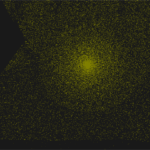
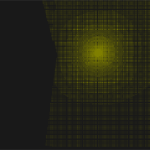
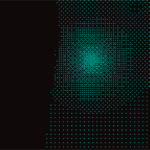
Two color dithering post-processing
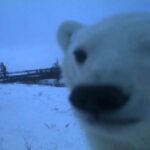
That pretty easy dithering postprocessing shader that get picture from screen and convert them.
Better work for 3D scene than 2d overlay.
You can freely modified, use and share that shader. I’m sure that not optimize shader, and hope someone can modified that shader.
Instruction:
1. Add CanvasLayer to your scene
2. Add ColorRect to CanvasLayer
3. Make ColorRect overlay all your camera with anchor preset full rectangle
4. Apply code below to ColorRect
5. Setting up shader parameters
Shader code
shader_type canvas_item;

uniform int step_posterize : hint_range(0, 100, 1) = 20;
uniform int step_pixelated : hint_range(0, 1000, 1) = 720;

uniform vec3 color_A : source_color = vec3(0.5, 0.5, 0.0);
uniform vec3 color_B : source_color = vec3(0.1, 0.1, 0.1);

uniform bool dithering_bayer;
uniform bool animated_dithering;
uniform bool smooth_animate;

uniform float interval : hint_range(0.1, 5.0, 0.1) = 0.1;

uniform sampler2D text : hint_screen_texture, repeat_disable, filter_nearest;

const mat4 THRESHOLD_MATRIX = mat4(
		vec4(1.0 / 17.0,  9.0 / 17.0,  3.0 / 17.0, 11.0 / 17.0),
		vec4(13.0 / 17.0,  5.0 / 17.0, 15.0 / 17.0,  7.0 / 17.0),
		vec4(4.0 / 17.0, 12.0 / 17.0,  2.0 / 17.0, 10.0 / 17.0),
		vec4(16.0 / 17.0,  8.0 / 17.0, 14.0 / 17.0,  6.0 / 17.0));

vec3 quntizarion_color(vec3 color){
	color = floor(color * vec3(float(step_posterize))) / vec3(float(step_posterize));
	return color;
}

vec2 pixelated(vec2 uv){
	uv = (vec2(ivec2(uv * float(step_pixelated))) + 0.5) / float(step_pixelated);
	return uv;
}

float rng_number(vec2 input){
	float rng;
	if (animated_dithering){
		if (smooth_animate){
			rng = fract(sin(dot(input, vec2(1242.1, 5514.12)) * 1.2911) * 155.12 * TIME);
		} else {
			rng = fract(sin(dot(input, vec2(1242.1, 5514.12)) * 1.2911) * 155.12 * floor(TIME / interval));
		}
	} else {
		rng = fract(sin(dot(input, vec2(1262.1, 5534.12)) * 2.4211) * 121355.1266);
	}

	return rng;
}

vec3 rng_dithering(vec3 color, vec2 uv){
	float randomness = color.r;
	if (randomness > rng_number(uv)){
		color = color_A;
	}else{
		color = color_B;
	}
	return color;
}

vec3 dithering(vec3 color, vec2 uv){
	vec2 reverse_uv = uv * vec2(float(step_pixelated));
	float bayer_index = THRESHOLD_MATRIX[int(reverse_uv.x) % 4][int(reverse_uv.y)% 4];
	if (bayer_index < color.r){
		color = vec3(color_A);
	} else{
		color = vec3(color_B);
	}
	return color;
}
void fragment() {
	vec2 aspect = vec2(1.0, SCREEN_PIXEL_SIZE.x / SCREEN_PIXEL_SIZE.y);
	vec3 color = texture(text, UV).rgb;

	color = texture(text, pixelated(UV)).rgb;
	color = quntizarion_color(color);
	if (dithering_bayer){
		color = dithering(color, pixelated(UV * aspect));
	} else {
		color = rng_dithering(color, pixelated(UV * aspect));
	}
	//color = vec3(rng_number(UV));
	COLOR.rgb = color;

}
Live Preview