
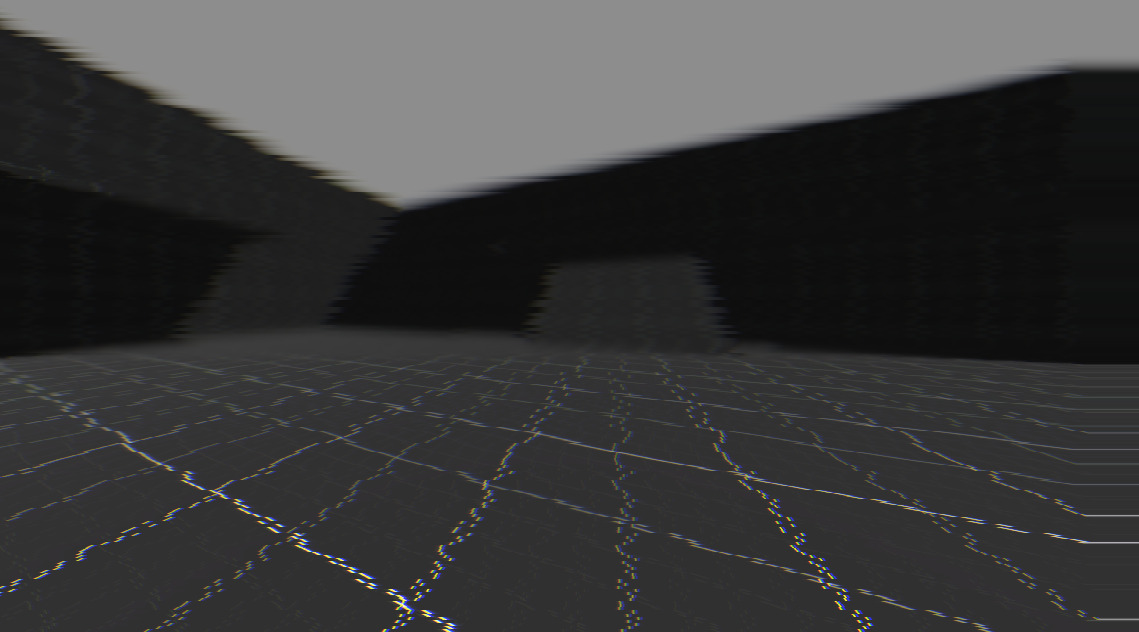
VHS Shader/Distortion

An implementation of https://www.shadertoy.com/view/Ms3XWH
Works best with minimal Shake, or else the scanlines disappear. Color distortion works best.
Works as Control Overlay with a ColorRect. Feel free to play with the values.
Look at Test_CRT.tscn in the Github to see how it works.
Shader code
// adapted from:
// https://www.shadertoy.com/view/Ms3XWH

shader_type canvas_item;
uniform float shake: hint_range(0, 10) = 0.015;
uniform float noiseQuality: hint_range(0.1, 250,0.1) = 250;
uniform float noiseIntensity: hint_range(0, 0.05,0.001) = 0.001;
uniform float offsetIntensity: hint_range(0, 0.05,0.0001) = 0.05;
uniform float colorOffsetIntensity: hint_range(0.1, 1.5,0.001) = 0.5;
uniform sampler2D screen_texture : hint_screen_texture, repeat_disable, filter_nearest;

float rand(vec2 co)
{
    return fract(sin(dot(co.xy ,vec2(12.9898,78.233))) * 43758.5453);
}

float verticalBar(float pos, float uvY, float offset)
{
    float edge0 = (pos - shake);
    float edge1 = (pos + shake);

    float x = smoothstep(edge0, pos, uvY) * offset;
    x -= smoothstep(pos, edge1, uvY) * offset;
    return x;
}


void fragment() {
	vec2 iResolution = 1.0 / SCREEN_PIXEL_SIZE;
	vec2 uv = FRAGCOORD.xy / iResolution.xy;
    // why these values for i?
    for (float i = 0.0; i < 0.71; i += 0.1313)
    {
        float d = mod(TIME * i, 1.7);
        float o = sin(1.0 - tan(TIME * 0.24 * i));
    	o *= offsetIntensity;
        uv.x += verticalBar(d, uv.y, o);
    }
	float uvY = uv.y;
    uvY *= noiseQuality;
    uvY = float(int(uvY)) * (1.0 / noiseQuality);
    float noise = rand(vec2(TIME* 0.00001, uvY));
    uv.x += noise * noiseIntensity;

	vec2 offsetR = vec2(0.006 * sin(TIME), 0.0) * colorOffsetIntensity;
    vec2 offsetG = vec2(0.0073 * (cos(TIME * 0.97)), 0.0) * colorOffsetIntensity;

	float r = texture(screen_texture, uv + offsetR).r;
    float g = texture(screen_texture, uv + offsetG).g;
    float b = texture(screen_texture, uv).b;

	//vec4 tex = vec4(r, g, b, 1.0);
	vec4 tex=vec4(r, g, b,1.0);
    COLOR = tex;
}
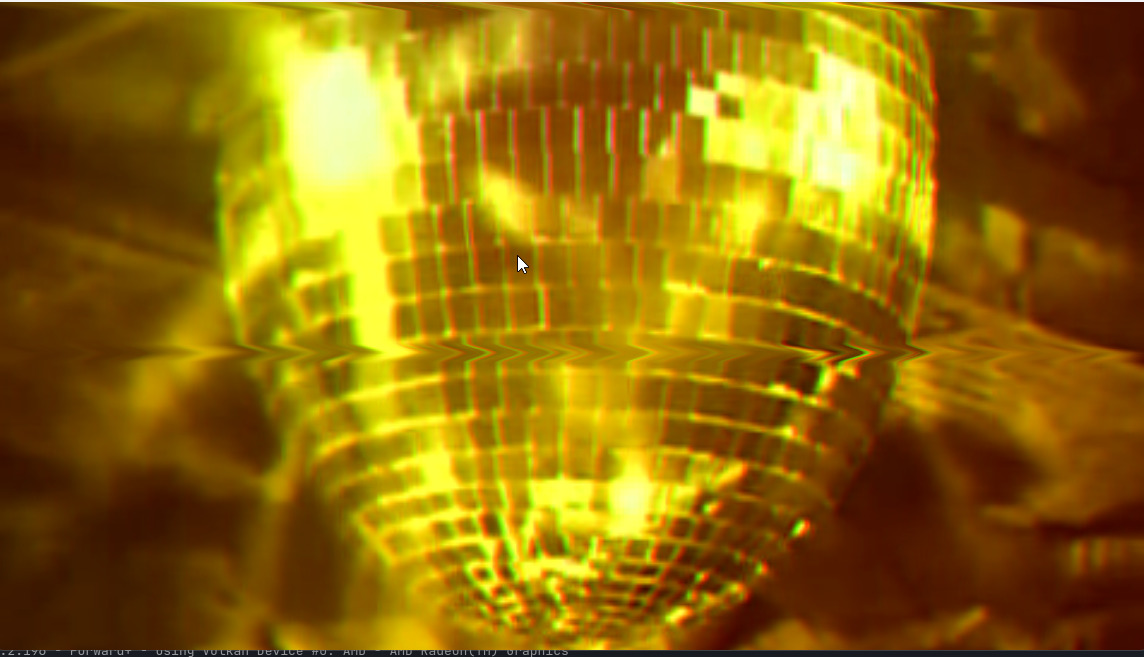
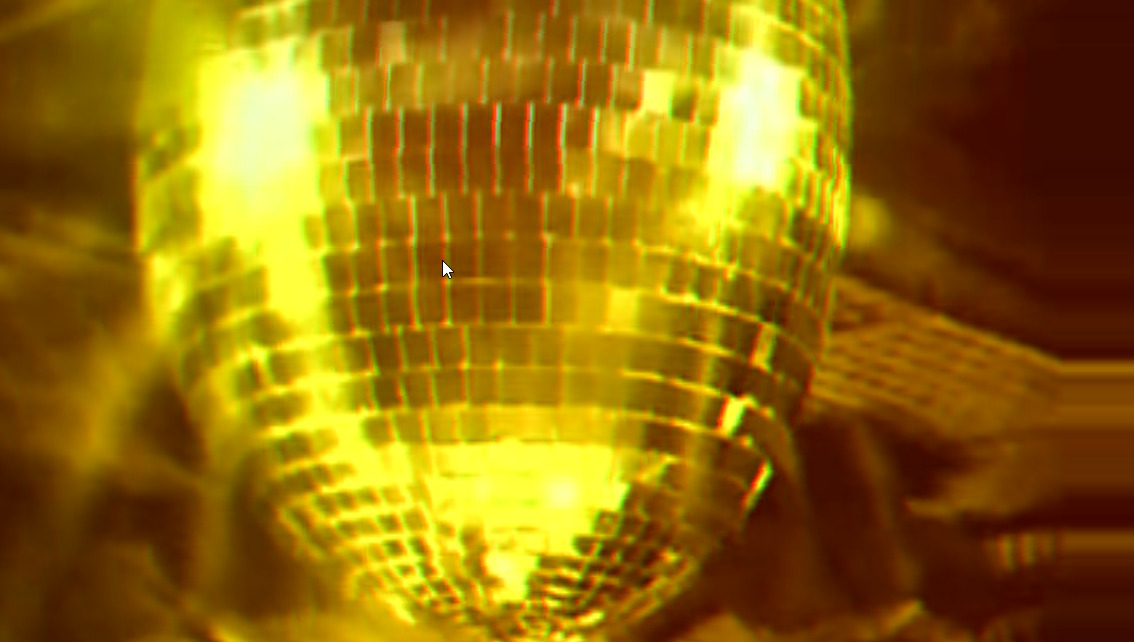
Live Preview

Comments 4
An error on the line:
"Expected valid type hint after ':'"
This must be for Godot 3.
Just put
in the fragment. No need to define Screen_texture in the beginning. SImiliar to this shader:
https://godotshaders.com/shader/cheaper-edge-detection-post-processing/
This should work for Godot 3:
shader_type canvas_item; uniform float shake: hint_range(0, 10) = 0.015; uniform float noiseQuality: hint_range(0.1, 250,0.1) = 250; uniform float noiseIntensity: hint_range(0, 0.05,0.001) = 0.001; uniform float offsetIntensity: hint_range(0, 0.05,0.0001) = 0.05; uniform float colorOffsetIntensity: hint_range(0.1, 1.5,0.001) = 0.5; float rand(vec2 co) { return fract(sin(dot(co.xy ,vec2(12.9898,78.233))) * 43758.5453); } float verticalBar(float pos, float uvY, float offset) { float edge0 = (pos - shake); float edge1 = (pos + shake); float x = smoothstep(edge0, pos, uvY) * offset; x -= smoothstep(pos, edge1, uvY) * offset; return x; } void fragment() { vec2 iResolution = 1.0 / SCREEN_PIXEL_SIZE; vec2 uv = FRAGCOORD.xy / iResolution.xy; // why these values for i? for (float i = 0.0; i < 0.71; i += 0.1313) { float d = mod(TIME * i, 1.7); float o = sin(1.0 - tan(TIME * 0.24 * i)); o *= offsetIntensity; uv.x += verticalBar(d, uv.y, o); } float uvY = uv.y; uvY *= noiseQuality; uvY = float(int(uvY)) * (1.0 / noiseQuality); float noise = rand(vec2(TIME* 0.00001, uvY)); uv.x += noise * noiseIntensity; vec2 offsetR = vec2(0.006 * sin(TIME), 0.0) * colorOffsetIntensity; vec2 offsetG = vec2(0.0073 * (cos(TIME * 0.97)), 0.0) * colorOffsetIntensity; float r = texture(SCREEN_TEXTURE, uv + offsetR).r; float g = texture(SCREEN_TEXTURE, uv + offsetG).g; float b = texture(SCREEN_TEXTURE, uv).b; //vec4 tex = vec4(r, g, b, 1.0); vec4 tex=vec4(r, g, b,1.0); COLOR = tex; }Why does it become fully black when I zoom out much? When zoomed in it works as expected (using it as overlay to other CanvasItems ofc), but once I zoom out somewhat, it becomes an opaque black square.